Redacted.
Redacted.
AI orchestration completely embedded across the operations of a UK food & beverage manufacturer. Built to save millions. Live in operational pilot.
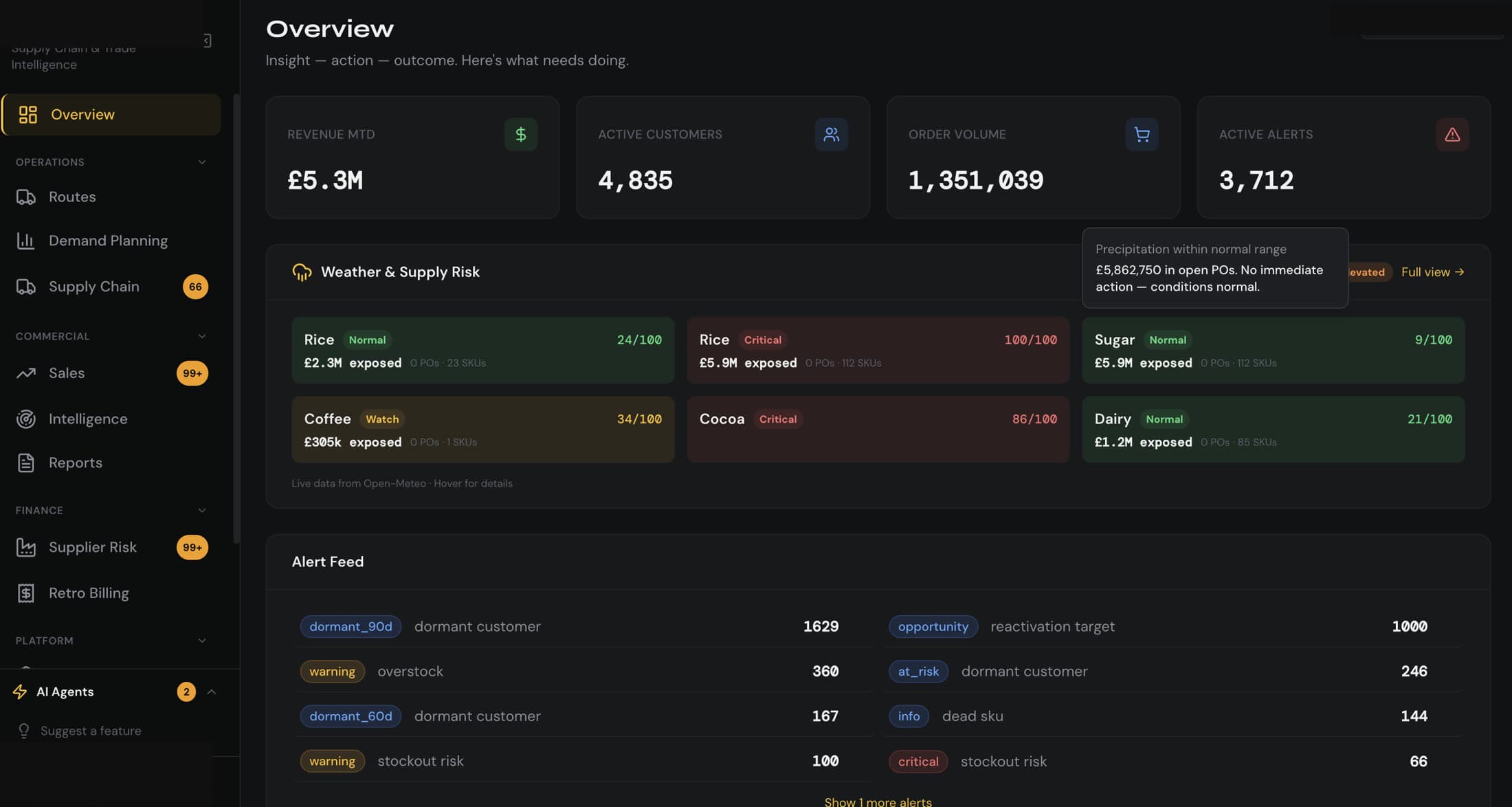
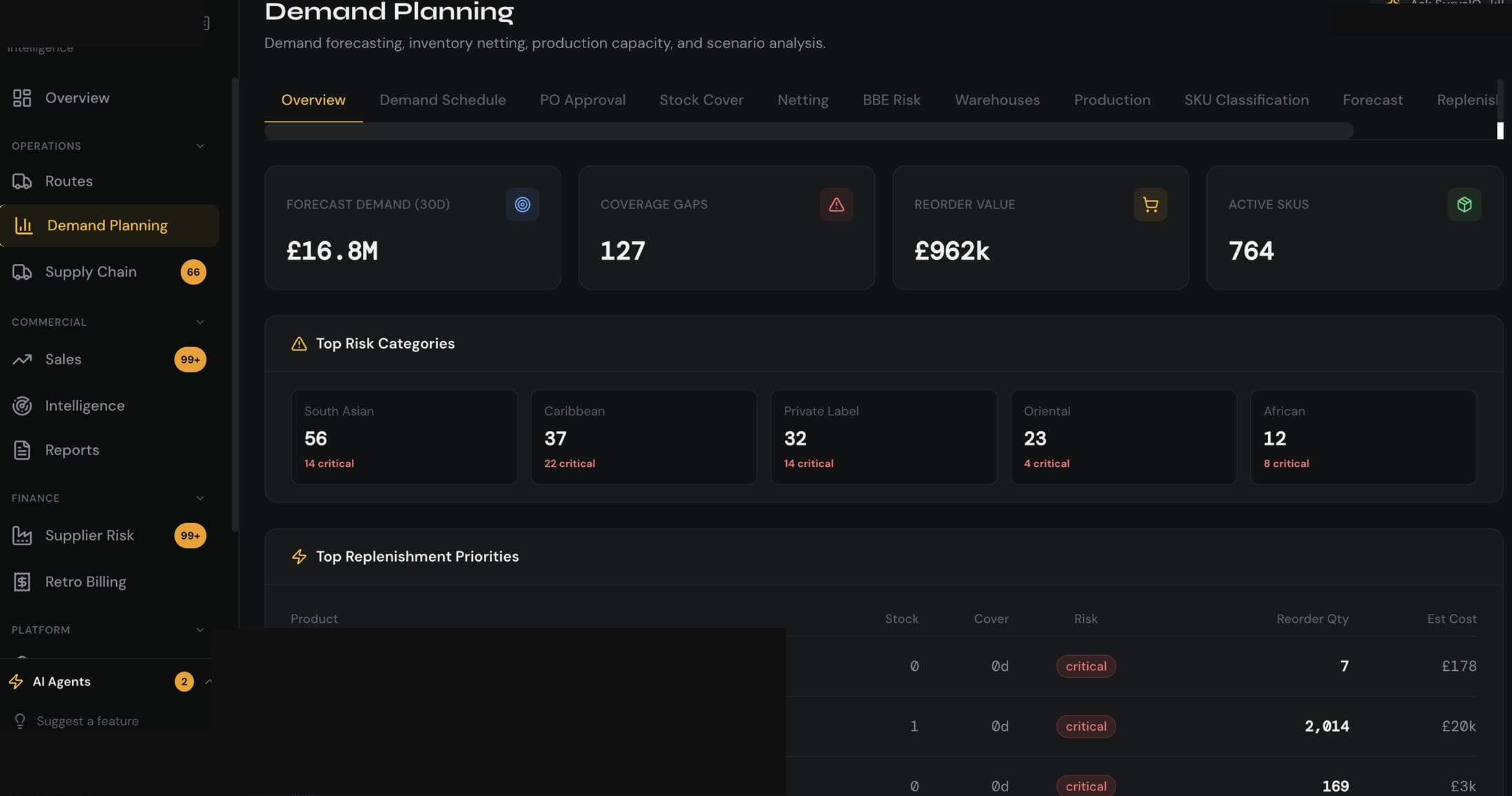
One operator. Multiple connected surfaces — supply chain, demand planning, sales, market intelligence, commodity & FX exposure, financial reporting. Designed end-to-end. Built solo. Over 140 specifications define the system. The pilot is live: 250 SKUs, 52 customers, a working demand planner using it daily, and nine years of order history — millions of order lines — rebuilt with a source tag on every row.
The forecasting runs as a tournament. Every SKU is classified by its demand pattern — smooth, erratic, intermittent, lumpy — and models compete within each class, the champion chosen on measured accuracy. The system watches itself for drift and refits on a schedule, keeping a new model only when it beats the one it replaces. Richer layers — a Prophet tournament, gradient-boosted demand sensing — are built and gated, promoted only when they earn it. After the data-trust rebuild, the median forecast error fell by more than a third.
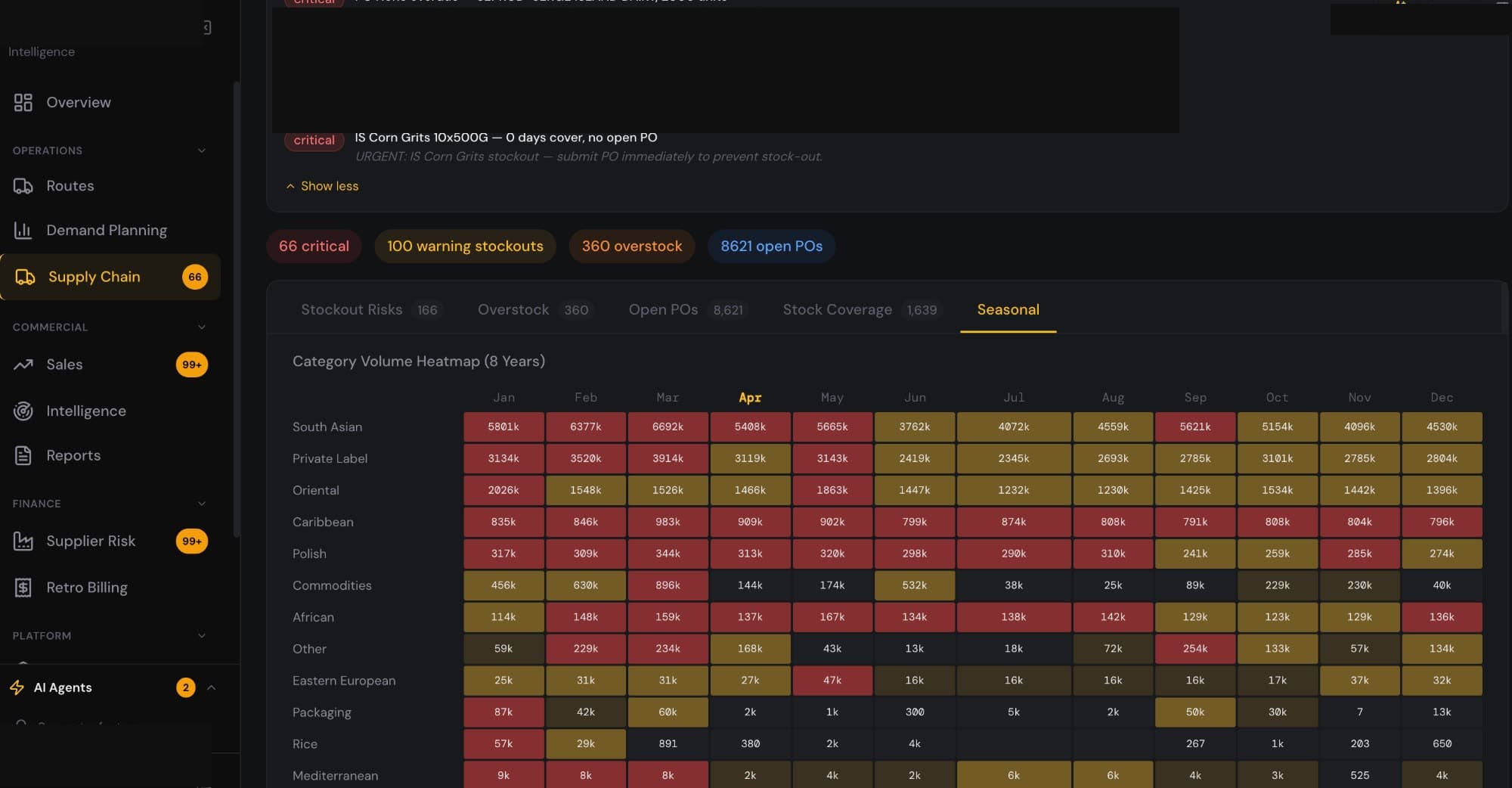
Trust in the data is treated as architecture, not hygiene. One recompute chain owns every derived number; every table carries a freshness watermark; a nightly coherence check asserts nothing has gone quietly stale. When data is stale, the API says so — an honest error beats a silently old number. On top sits a fleet of twelve detector agents that read everything and act on nothing: stockout risk, seasonal alerts, customer pulse, data-quality warnings, margin leaks — findings filed to one audit trail, decisions left to humans.
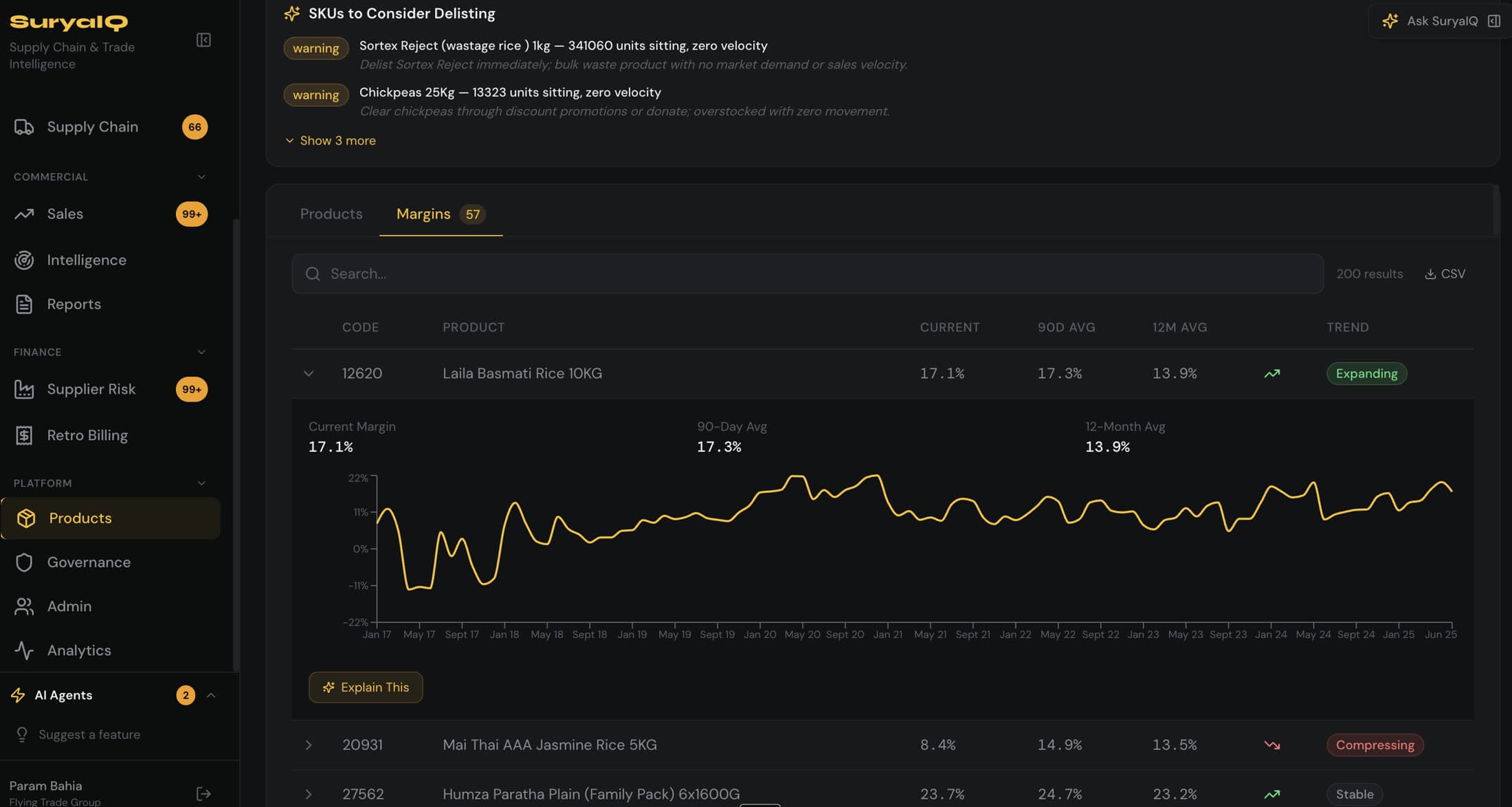
A 64-tool AI copilot handles the operational surface — natural-language queries across any dataset, automated report generation for the C-suite, answers that cite their source and their as-of time, and a design that says “I don’t know” rather than invent. Every tool is governance-aligned: decision gating ensures no AI action executes without appropriate human approval. Operations first. Finance is next.
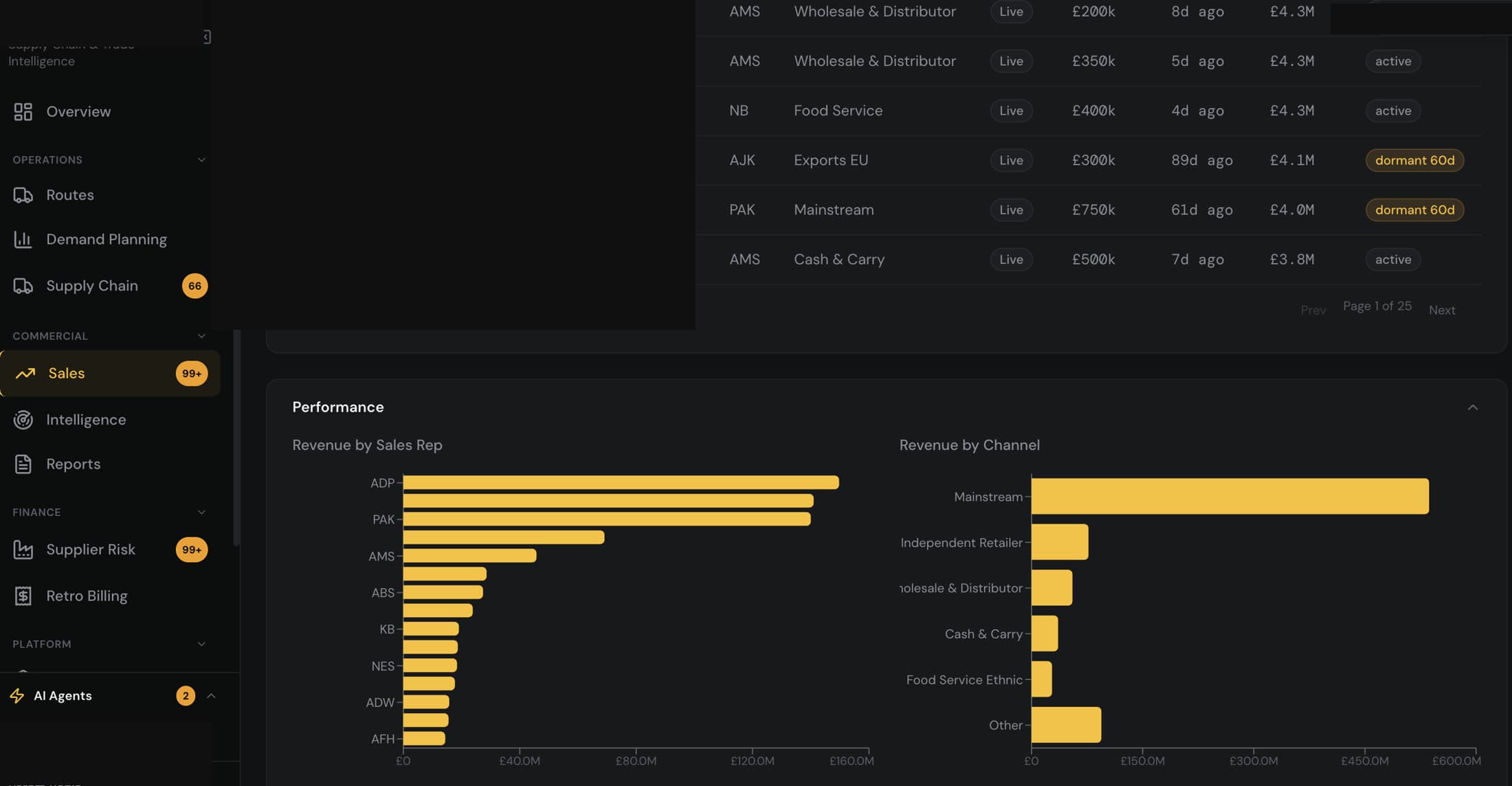
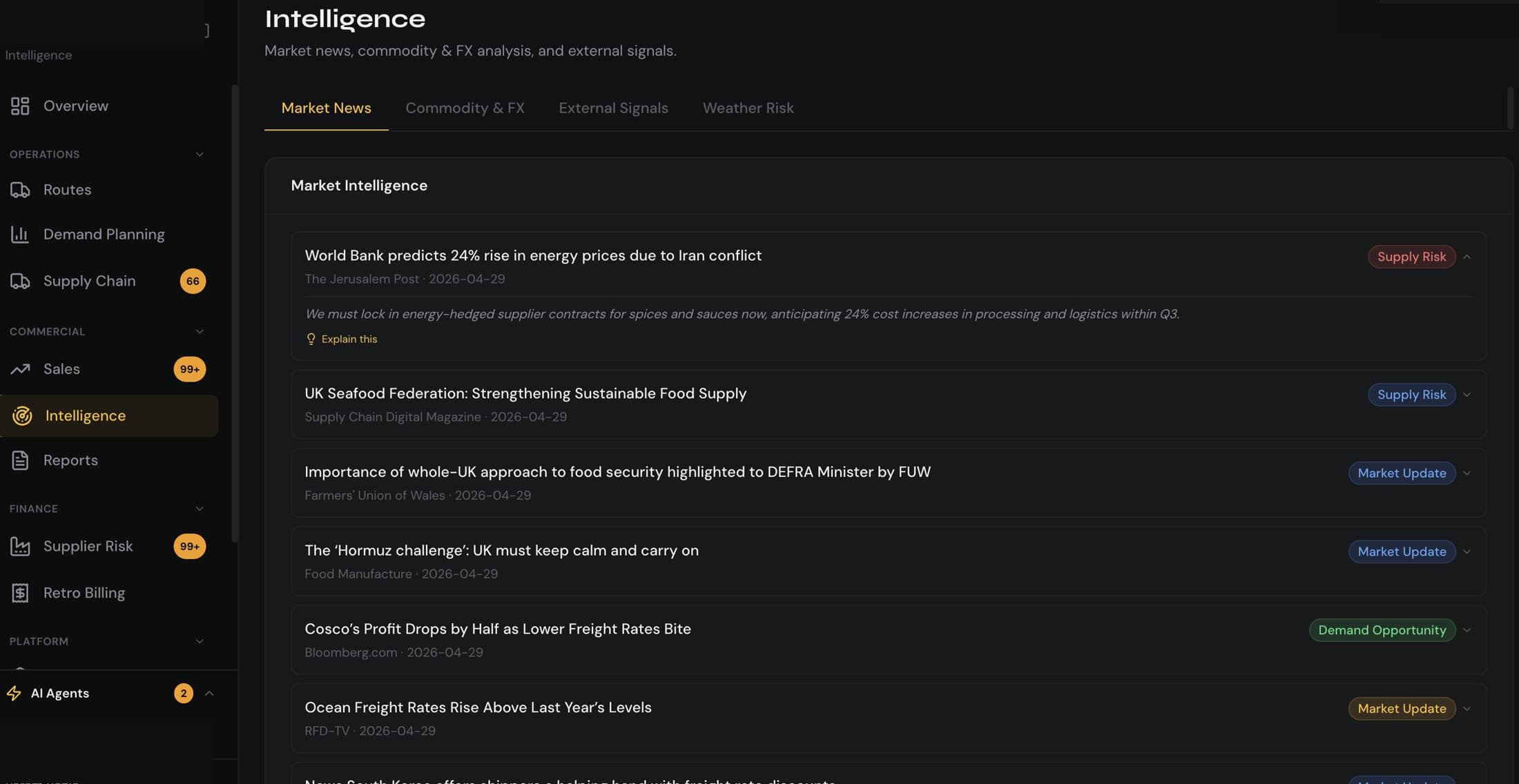
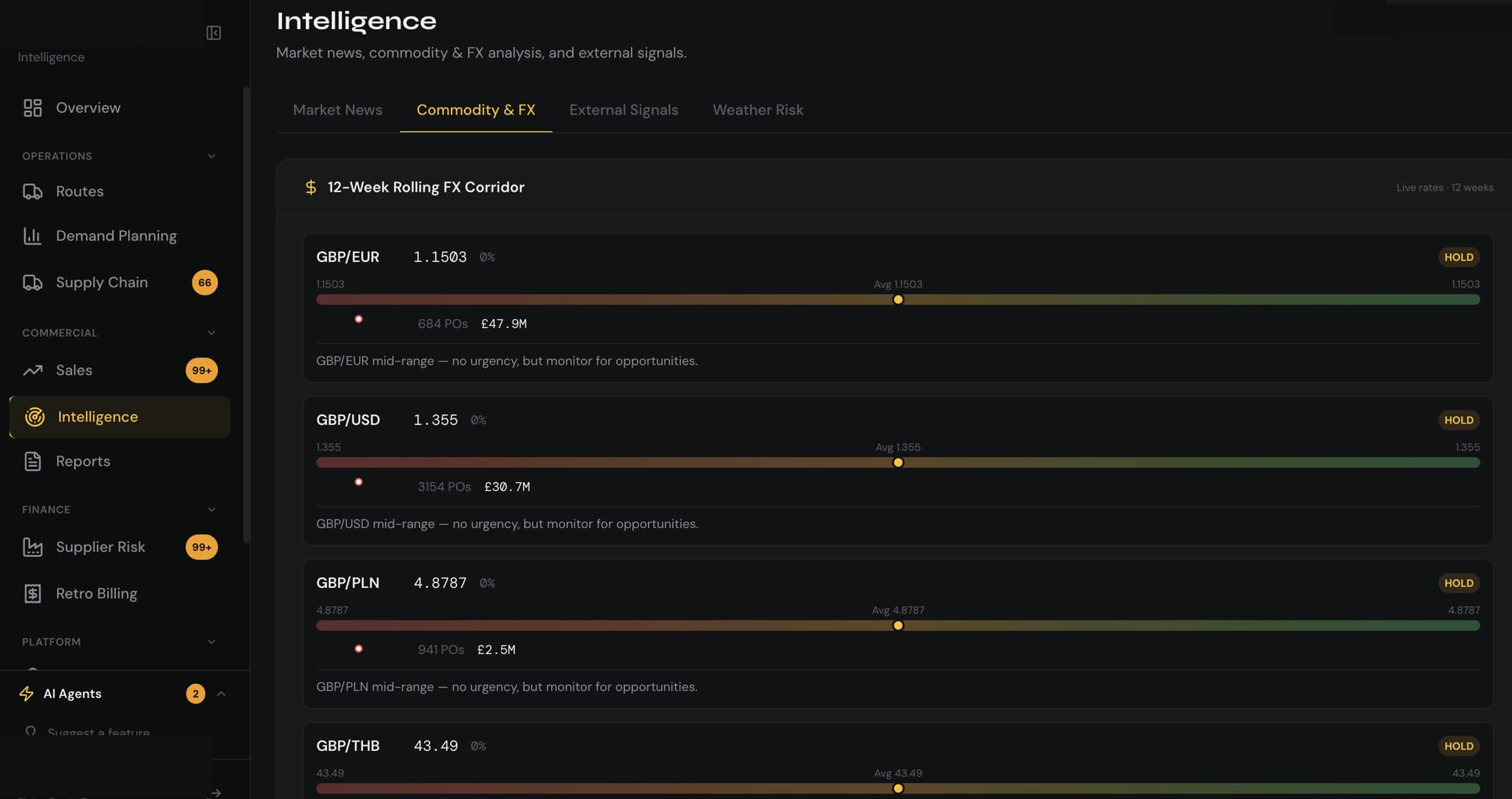
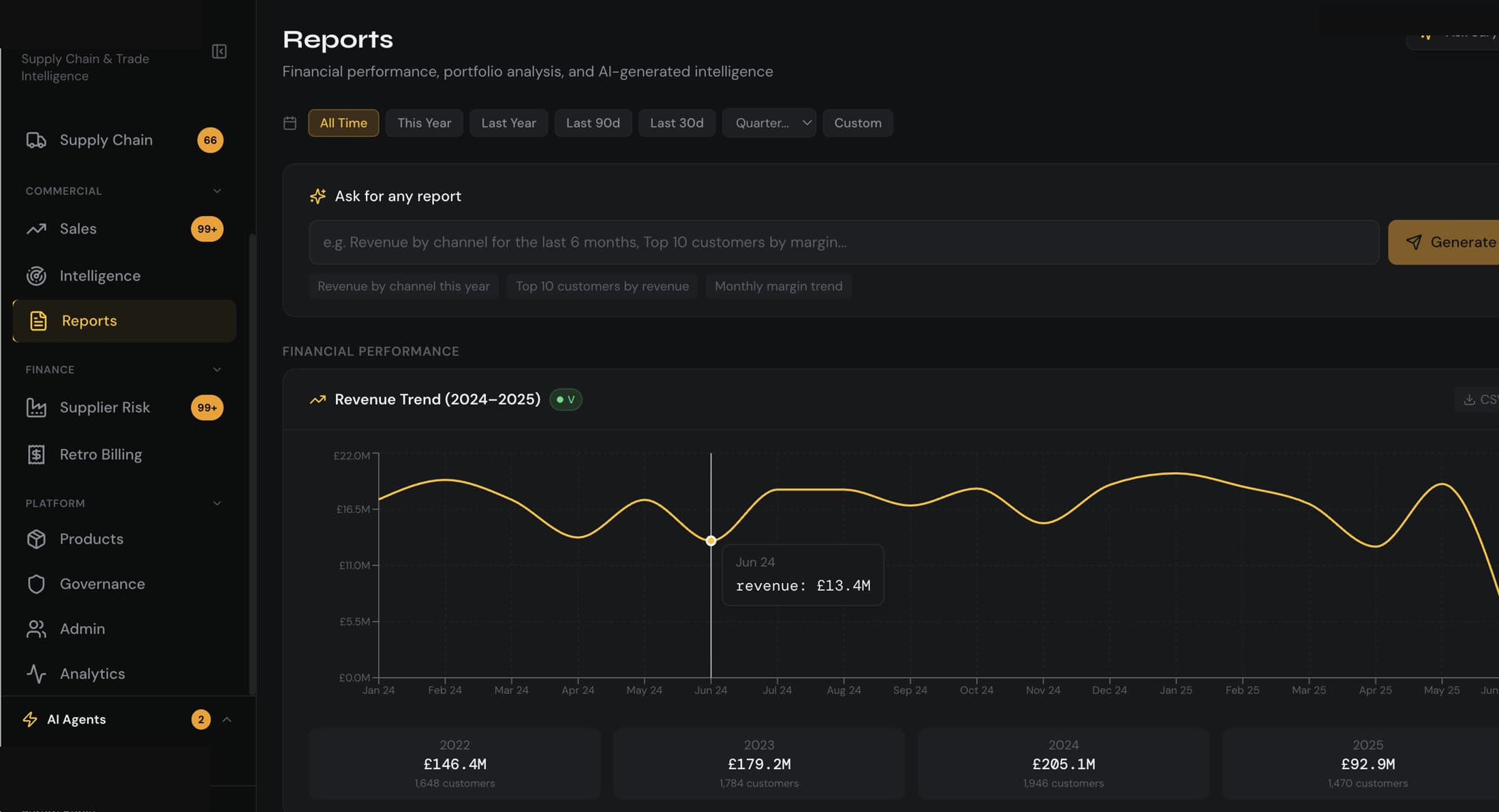
What follows is the application, with customer name, product names, and counterparty names blacked out. The numbers stay, because the numbers are the point — they show the scale of what one platform is doing across one organisation.