On Flow.
There is a version of discipline that looks like a locked room — everything measured, nothing wasted, the days stacked in clean rows. That is not what I am building. What I am building requires a different shape. It requires the capacity to be completely present in whatever arrives.
I spent a month in Lisbon. Not for work. Not to find myself. Because the conditions were right and the ticket was cheap and I had learned, by that point, to stop waiting for permission from my own calendar.
The mornings were coffee and cobblestones and a book I had been meaning to finish. The evenings were conversation with strangers in a language I do not speak well enough. None of it was productive in the way that word gets used. All of it was productive in the way that matters.
Flow is not something you manufacture. It is something you stop obstructing.
I drift cars. Not because I have a death wish — because there is no room in a controlled slide for anything but the present moment. The tyres are howling. The back end is stepping out. Your hands are making corrections faster than your conscious mind can process. The thinking stops. The doing takes over. And for those seconds, you are more yourself than you have been all week.
The same thing happens on a boat at sunset in Budapest. Or on a beach with nothing to do. Or walking through a Thai market at dusk with no particular destination.
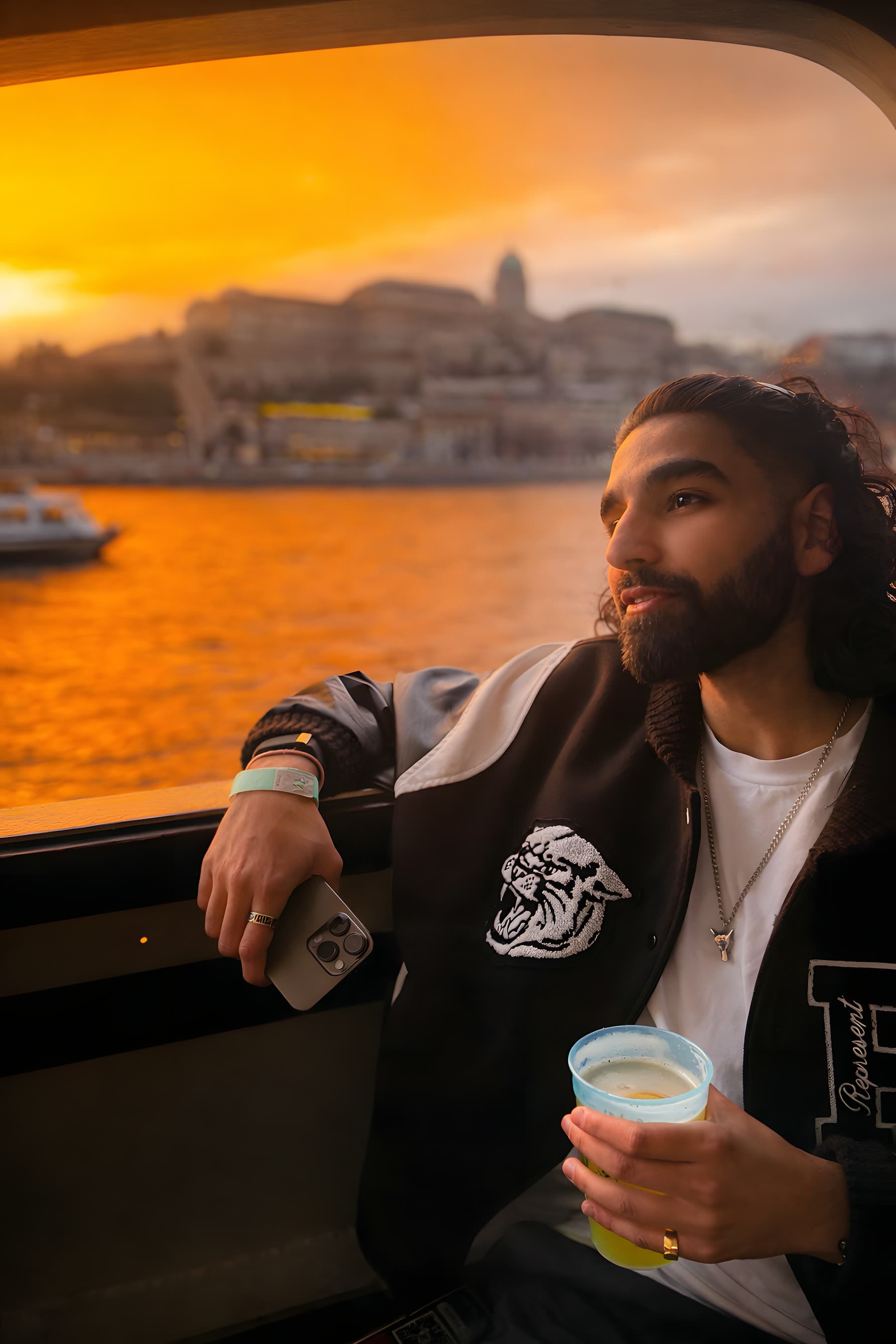
The common thread is not the activity. It is the absence of resistance. You are not trying to be anywhere else. You are not mentally rehearsing the email you need to send. You are here. Fully, unreservedly, here.
People confuse this with hedonism. It is not. Hedonism chases pleasure. Flow receives whatever is present — including difficulty, including boredom, including the kind of silence that makes most people reach for their phone.
I do not stop myself from enjoying things. I do not artificially restrict, and I do not artificially indulge. The restriction itself becomes the distraction. It occupies mental bandwidth that could be spent on the thing in front of you.
Intentional presence is harder than any rule. A rule is a shortcut. Presence requires you to be honest with yourself in real time, over and over, about what you actually need versus what you are doing out of habit.
The Method talks about action moving you into a flow state “almost without your permission.” This is the physical expression of that principle. You do not think your way into flow. You move. You travel. You put yourself in conditions where the only option is to be present — the drift, the mats, the unfamiliar city, the wave — and the rest takes care of itself.
Nature does not perform. It does not optimise. It is simply, completely, what it is. The closest I get to that is when I stop trying to be something and start being somewhere — fully, without reservation, without the running commentary.